

Table of Contents
Hairloss, affects millions of people around the world, impacting self-esteem and overall quality of life. Among various treatment options that we provide here in Nairobi, Platelet-Rich Plasma (PRP) therapy has emerged as a popular and effective solution.
What is PRP for Hair Loss?
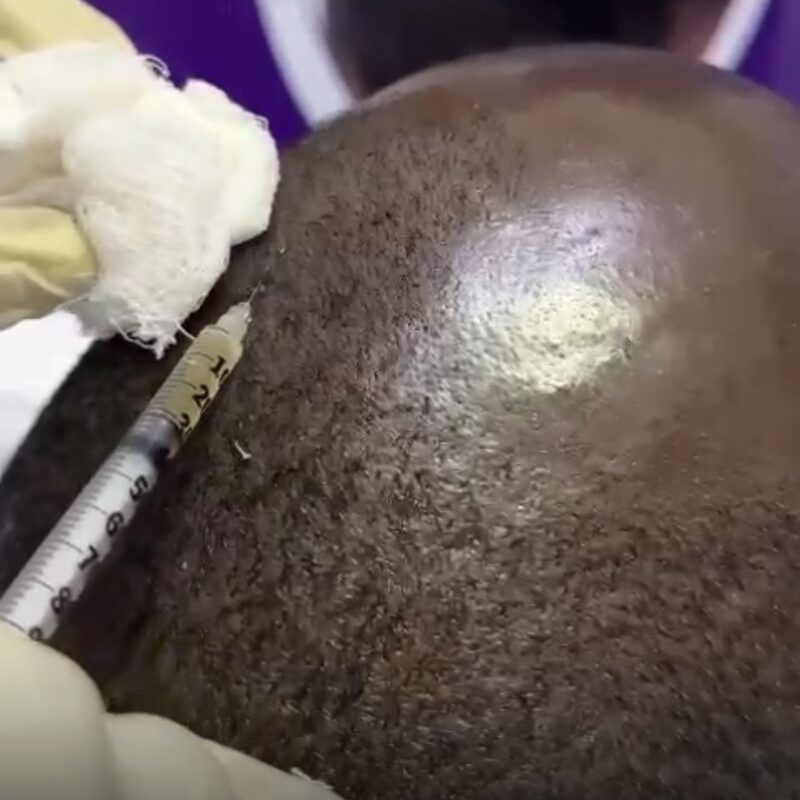
Platelet-Rich Plasma (PRP) therapy is a medical treatment that utilizes the body’s own healing properties to promote hair growth. It involves drawing a small amount of your blood, processing it to concentrate the platelets, and injecting this enriched plasma into the scalp. Platelets contain growth factors that can stimulate hair follicles, promote healing, and potentially lead to hair regrowth. PRP therapy is increasingly recognized as a viable option for those suffering from various types of alopecia, including traction alopecia secondary to tight hair styles and also androgenetic alopecia, which is common among both men and women.
Can PRP Cause Hair loss?
One of the common concerns regarding any hair loss treatment is whether it might worsen the condition. While it is essential to note that everyone’s response to treatment can differ, PRP therapy is generally safe and should not cause hair loss. In some cases, patients may experience temporary shedding of hair before new growth occurs, known as “shedding phase.” This process is usually a sign that the treatment is working and that the hair follicles are entering a new growth cycle.
Is PRP Treatment Painful?
Many prospective patients often ask if PRP treatment for hair loss is painful. The good news is that the procedure is relatively painless. During the treatment, a topical anesthetic is typically applied to the scalp to minimize any discomfort from the injections. Most patients report only mild sensations during the procedure, such as slight pinching or pressure. After treatment, there might be some tenderness, but this usually subsides within a few hours.
Does PRP Treatment Regrow Hair?
Platelet-Rich Plasma (PRP) therapy has been widely studied and shown to promote hair regrowth by stimulating hair follicles and prolonging the growth phase of the hair cycle. This treatment utilizes the patient’s own blood, which is processed to extract growth factors that help rejuvenate dormant follicles. Many individuals experience noticeable improvements in hair thickness, density, and overall scalp health after undergoing PRP therapy. However, results can vary depending on factors such as genetics, underlying conditions, and treatment consistency. To achieve the best outcome, a series of PRP sessions is typically recommended, usually spaced about four to six weeks apart.
Is PRP Hair Treatment Painful?
As mentioned earlier, PRP hair treatment is generally well-tolerated and not significantly painful. Patients often describe the sensation during the injections as minimal discomfort, thanks to the use of anesthetics. After the procedure, it is common to experience some mild soreness or sensitivity in the treated area, but this is usually manageable and temporary.
PRP for Hair Loss in Women
Alopecia is not just a male issue; women also suffer from hair loss due to various factors, including hormonal changes, genetics, stress, and tight hair styles. PRP therapy has been particularly effective for women facing hair thinning and loss. Studies have shown that women respond positively to PRP treatments, often experiencing increased hair volume and improved scalp health. If you’re a woman dealing with hair loss, PRP could be a game-changer in restoring your hair and confidence.
Does PRP Regrow Hair?
Platelet-Rich Plasma (PRP) therapy has been shown in numerous studies to effectively stimulate hair regrowth. By revitalizing hair follicles and prolonging the hair growth cycle, PRP enhances hair thickness and density. While individual results may vary, many patients notice visible improvements after multiple sessions. For the best outcome, a series of treatments spaced about a month apart is typically recommended by specialists.
Does prp cause hair shedding iniatially
Yes, PRP therapy can cause initial hair shedding, but this is a temporary and normal response. This shedding, known as shock loss, occurs because the treatment stimulates hair follicles, pushing out weaker, miniaturized hairs to make way for new, healthier growth. It usually happens within the first few weeks after treatment and should subside as stronger hairs begin to grow.
If shedding persists beyond a few months, it may be due to other underlying conditions, and consulting a specialist would be advisable.
Does PRP Hair Treatment Work?
The effectiveness of PRP hair treatment has been well-documented in various studies. While results can vary based on individual factors such as the severity of hair loss and the underlying cause, many patients see positive outcomes. PRP treatment is a safe, minimally invasive option that uses your body’s own healing properties, making it an attractive choice for those seeking hair restoration solutions.
Conclusion
If you are struggling with alopecia or hair loss, PRP therapy may offer a promising solution to help you regain your hair and confidence. With its minimal discomfort, safety, and potential for effective results, PRP therapy is worth considering. At Afya Core Skin and Laser Clinic, our expert team is here to guide you through the process and tailor a treatment plan to meet your unique needs. Don’t let hair loss define you—reach out to us today for a consultation!